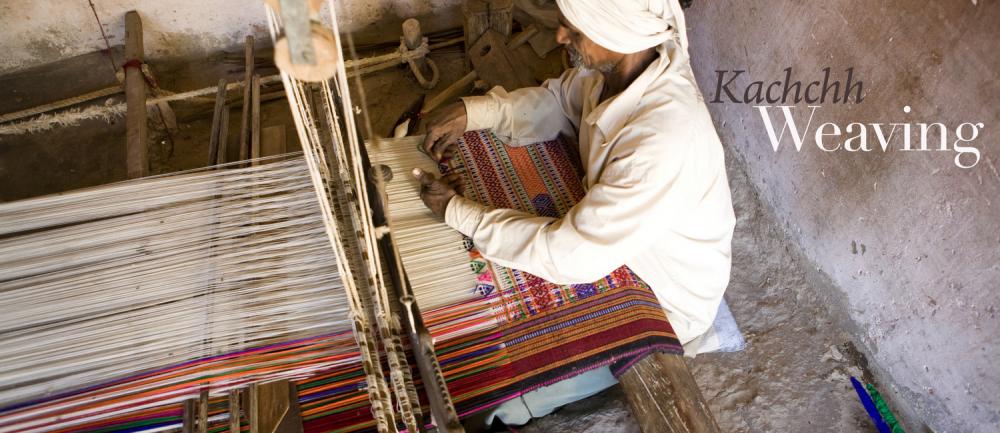
Yesterday’s Looms
Kachchhi weavers traditionally come from the Marwada and Maheswari communities. The Maheshwaris transitioned into the art of mashroo, while the Marwada style is now well known as Kachchhi weaving. This community is versatile, crafting woven textiles, leather and woodwork all over Kachchh.
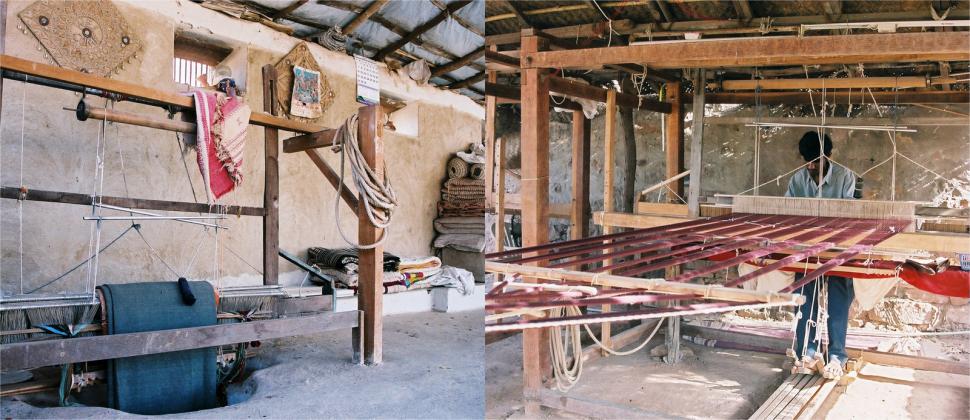
Traditional looms at Bhujodi, a weaver's village close to Bhuj
Weavers are closely linked socioeconomically with their local clients, the Ahirs, Rajputs, and Rabaris. Each weaver was once personally linked with a Rabari family, who would supply yarn from sheep and goats. Farming communities like Ahirs cultivated kala cotton, which produced woven textiles for shoulder cloths and headgear. Sheep and goat wool was used for veils, skirts, shawls and blankets. The designs woven into Kachchhi woven fabrics were inspired by the communities who wore them, replicating the shapes of musical instruments, the footsteps of an animal herd, etc. The names for motifs like vakhiyo, chaumukh, satkani, hathi, or dholki are evocative of the rural images.
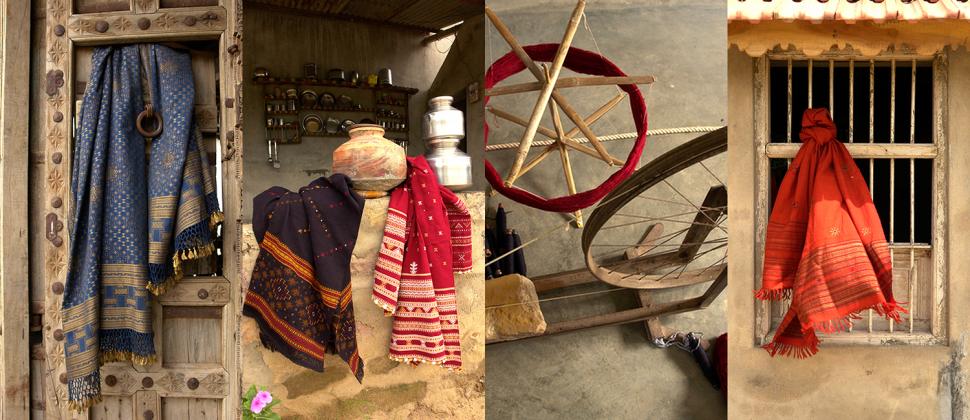
Traditional Kachchhi Shawls
In the 1960’s, cheaper mill made cloth flooded the market and the local market declined. The weavers were forced to look for external clients and shift their practices to fit the demand of larger markets. A group of four enterprising weavers created a Bhujodi Weavers Cooperative which brought together all of the weavers in Bhujodi. Now Bhujodi is a popular tourist destination for weaving, though weavers are spread all over Kachchh.
Weaving Today
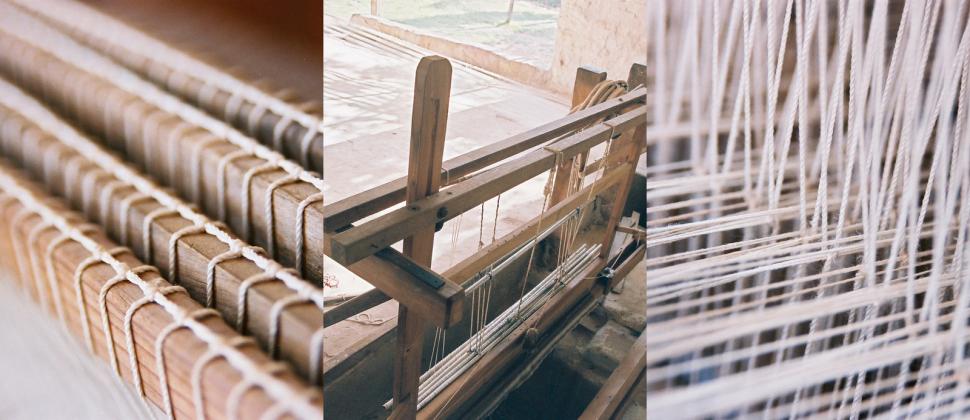
Pit loom
The strong community linkages which insulated the weaving trade have ceased to exist. Weaving has taken on a drastically new shape in the modern marketplace. Weavers have become dependent on markets outside of Kutch for raw materials acquisition and sales. The hub for weavers and traders to procure raw material is Ludhiana, where most weavers get their acrylic yarn. Departing from traditional raw materials, weavers now use silks, rayons, and acrylic yarn in their textiles.
A Sustainable Future
The entrepreneurial spirit amongst weavers has flourished in the last four years. Khamir has focused on providing services to foster that spirit towards business development. By sourcing various kinds of yarn, training weavers to dye cotton yarn, stocking dyestuffs, offering design development trainings, and facilitating craft exhibitions, Khamir is helping weavers to build sustainable businesses. A few enterprising weavers have taken up using the kala cotton developed by Khamir.
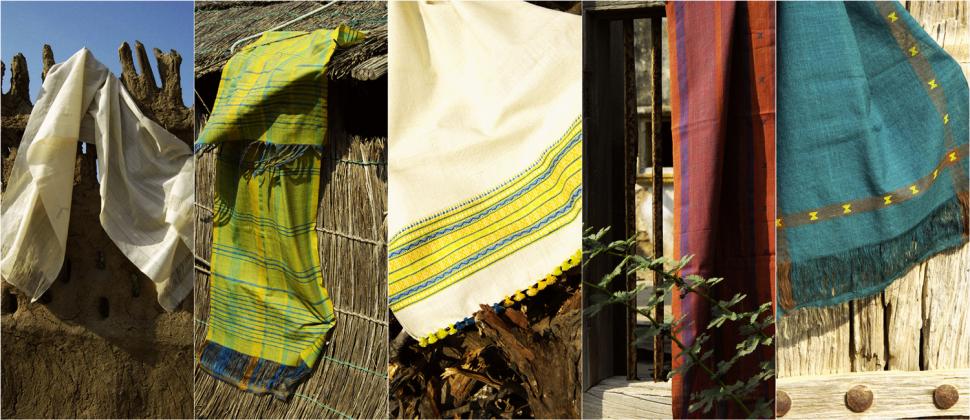
Kachchhi Stoles and Shawls
The Kachchh Weavers’ Association was founded in order to apply for the GI, the Geographical Indications Act with the World Trade Organization, for the Kachchh shawl. Receiving the GI designation has been a step towards protecting a common brand which has been significantly damaged by power loom imitations.
While getting GI is one of the first actions of this association, Khamir plans to utilize this platform for advocating on a number of issues facing the weavers. These include yarn prices, handloom policies, networking with other handloom groups, issues of fair wages and providing social security for all its members.